Gallery
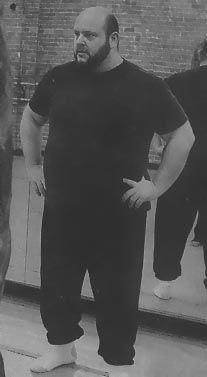
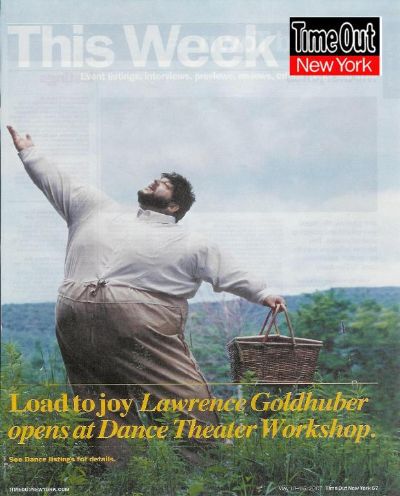
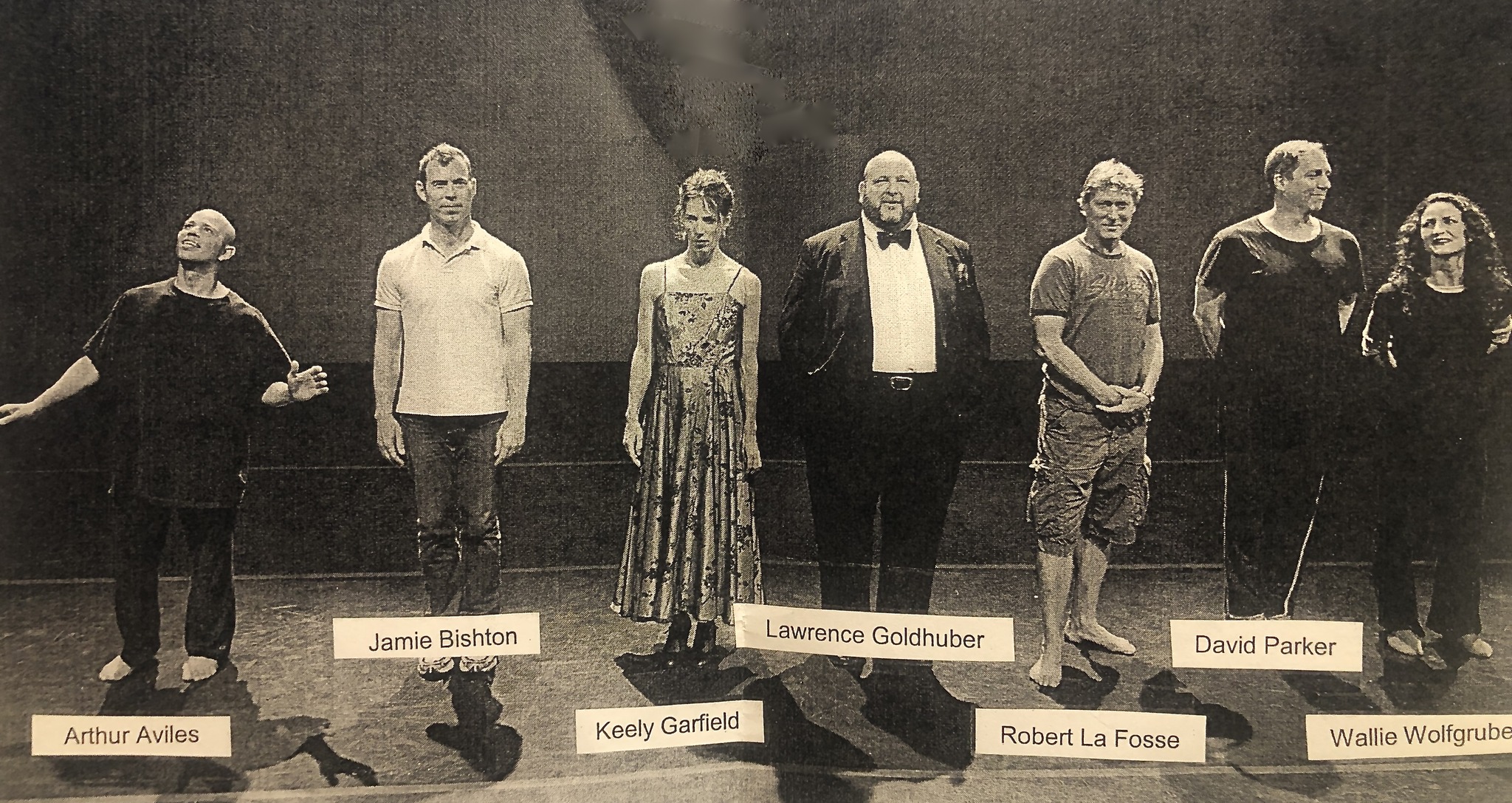
Seven Deadly Sins: Gluttony
Choreographed by Lawrence Goldhuber
Performed by Arthur Aviles, Jamie Bishton, Keely Garfield, Lawrence Goldhuber, Robert La Fosse, David Parker, Wallie Wolfgruber, Rebecca Wisocky, Molly Hickock
Music by Mark Mothersbaugh, Yello
Costumes by Liz Prince
Lighting Design by Robert Wierzel
Gluttony was commissioned by the Jacob’s Pillow Dance Festival.
QUOTES, REVIEWS AND ARTICLES ABOUT THE ORIGINAL GLUTTONY/SEVEN DEADY SINS AT JACOB’S PILLOW DANCE FESTIVAL
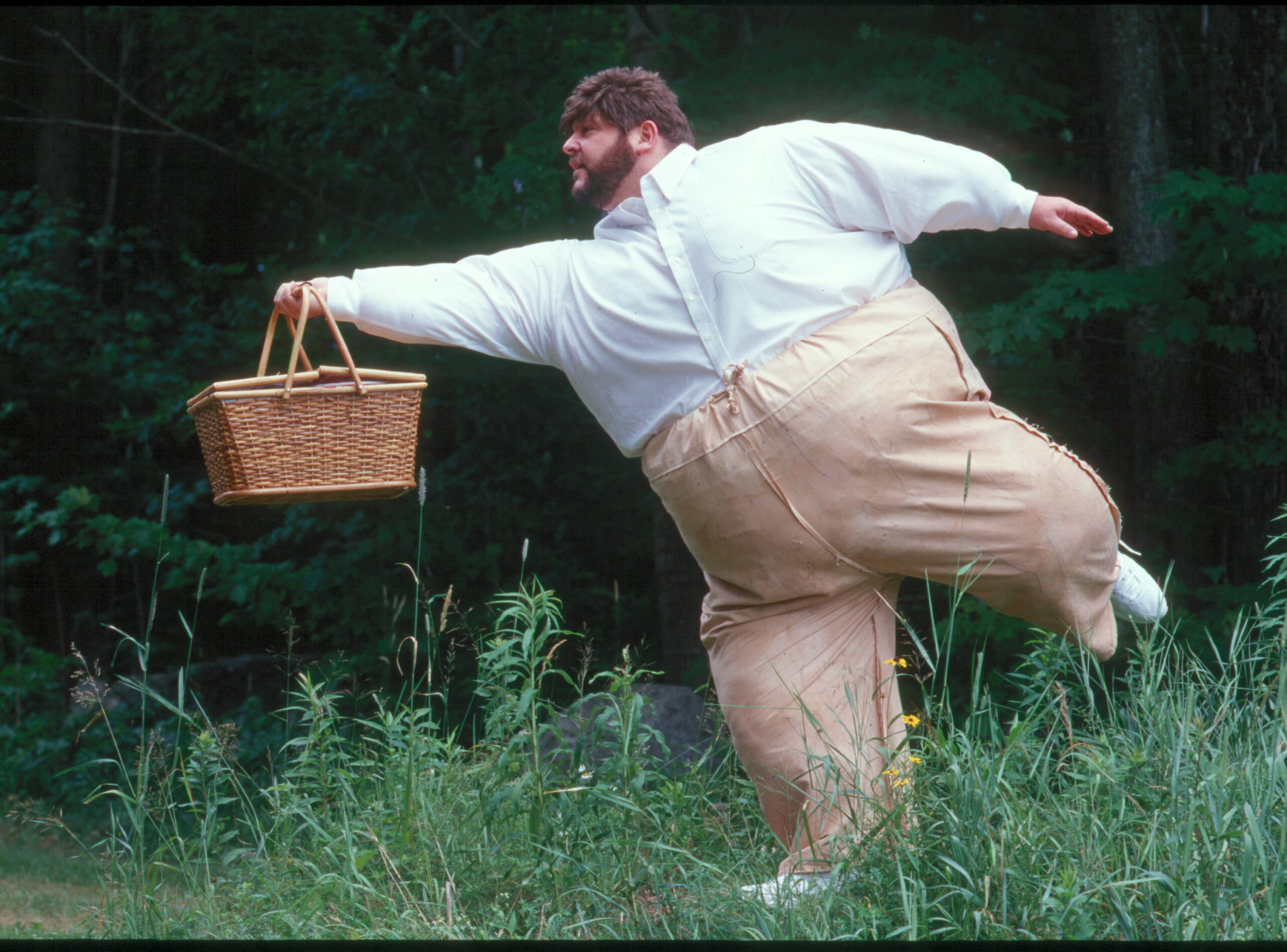
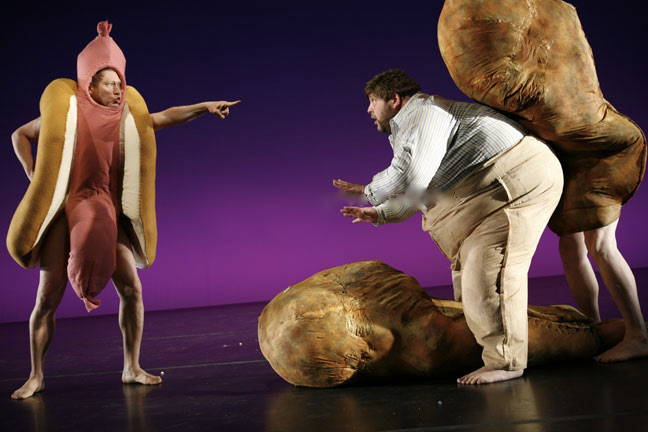
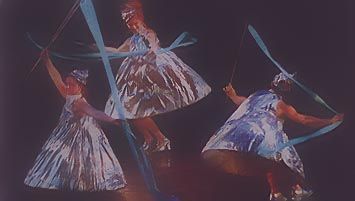
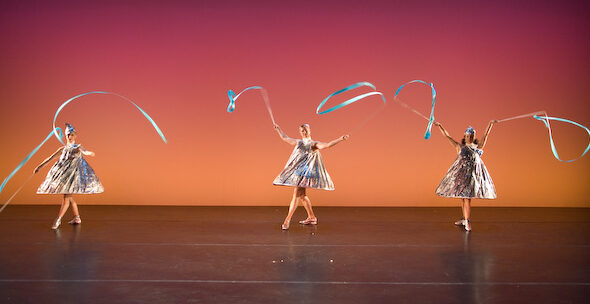
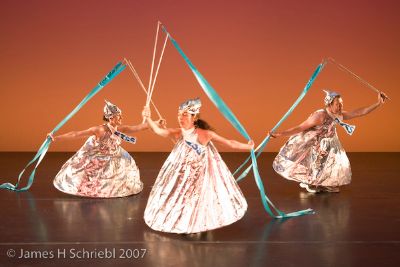
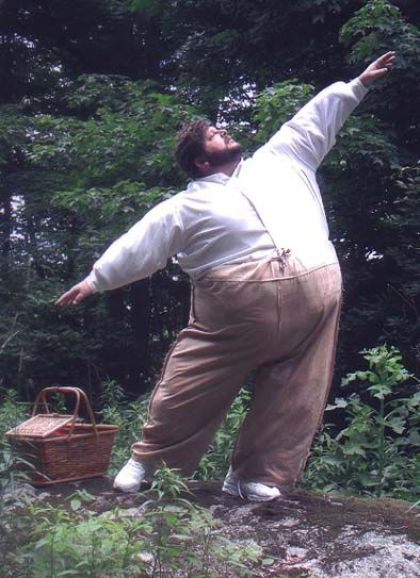
“The two fantasy sins, Lawrence Goldhuber’s Gluttony and Annie-B Parson’s Greed, seemed the most imaginative. Goldhuber, padded to twice his usual volume, trots on with a picnic basket and wolfs down some of the contents, then stretches out for a nap. The lunch comes to life (Bishton, Hickok and Rebecca Wisocky as Hershey’s Kisses, twirling blue ribbons, were my favorites) and eventually eats Goldhuber.”
Marcia B. Siegal, The Boston Phoenix
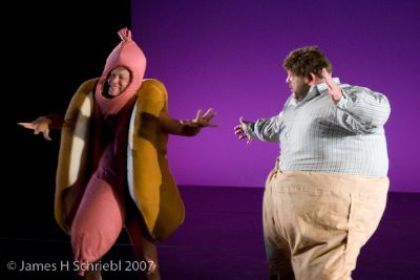
“Former Bill T. Jones favorite Lawrence Goldhuber created a hilarious “Gluttony.” Padding his massive frame with so much stuffing he looked inflated, Goldhuber was a gleeful picnicker whose post-meal dreams were invaded by oversize versions of the foods he had just eaten. Robert La Fosse was a riot as a dancing hot dog, the lower half of which fell out of the bun to dangle between his legs like an enormous sexual appendage.”
Karen Campbell, The Boston Globe
“Lawrence Goldhuber, against the advice of his friends, chose gluttony (the choreographer and dancer weighs more than 300 pounds). “Gluttony,” he says matter-of-factly, “is the sin I can access most easily.” Goldhuber’s Gluttony features three sections. In the first, he dances with a picnic basket. “I fall asleep, and there’s a dream sequence in which all the things that I ate come back to haunt me.” Liz Prince designed costumes resembling Hershey’s Kisses, chicken legs and a hot dog. “The hot dog has a kind of phallic, sexy-sinister quality,” Goldhuber says. “It’s more like a betrayed lover. My piece ends with death—the hot dog pulls my heart out. It’s so goofy, but it’s fast and funny.”
Gia Kourlas, Time Out New York
DANCE MAGAZINE REVIEW
Dancemakers Put New Spin On `Sins
Nov, 2001, by Wendy Perron
The new conglomerate version of George Balanchine’s The Seven Deadly Sins, masterminded by New York City Ballet principal Robert La Fosse and Broadway choreographer Chet Walker, gathered seven diverse choreographers (one sin for each)–Lawrence Goldhuber, Jamie Bishton, Chet Walker, David Dorfman, Robert La Fosse, Richard Move, and Annie-B Parson–and twelve versatile dancers. The result was an ingenious celebration of bad behavior that was rarely sinister.
For this reviewer, the highlight was “Greed.” Choreographed by Annie-B Parson (co-director of Big Dance Theatre) and featuring Molly Hickok (also of Big Dance) as chief sinner, it was hilarious and insightful. Parson set her ten-minute allotment vaguely in Germany–she used an old recording of a Kurt Weill orchestration–and attached greed to privilege. Surrounded by four women who were perhaps handmaidens, perhaps other society ladies, Hickok went giddy over a pair of red shoes, yelling “Meine Schuhe!” (German for “my shoes”) and staggering after Kate Johnson, who was wearing them. We ached with laughter over the progression of her greed, recognizing how greed begets greed, how once you step onto that escalator of materialism, it’s hard to step off. By the time Hickok spotted a white parasol that she had to have, she was a raving lunatic–and we all knew the feeling. At the end, her subordinate, Rebecca Wisocky, was left admiring the parasol, purring with a budding greed of her own. One of the horrors–and allures–of sin is its contagiousness.
“Sloth” gave downtown choreographer David Dorfman a chance to slow down. He luxuriated in loose-limbed movement and sly verbal wit. Paul Matteson rolled over another dancer, triggering a conversation about how to do nothing well. Matteson danced with such buoyancy and release that you could feel your lungs expand while watching him. A wonderful moment came when Matteson and Jamie Bishton faced the audience blankly, held a stillness, and then talked about how great it was.
The color red figured prominently in Walker’s “Anger.” The dancers posed indignantly and strutted with an attractive pent-up wrath to Astor Piazzolla’s tangy tangos. When Desmond Richardson flared a red cloth like a toreador, he looked gloriously sexy, but neither he nor any of the other dancers ever burst into real rage. Walker’s “Anger” remained a somewhat decorative sin.
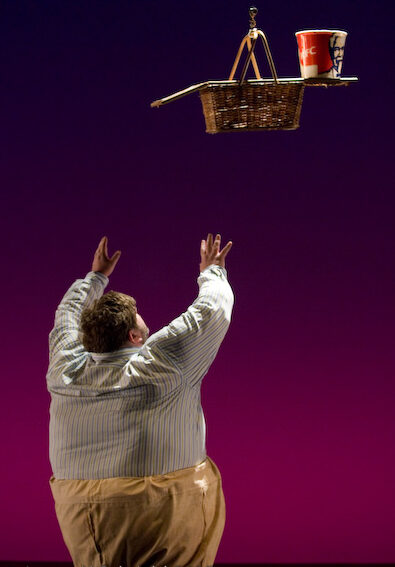
Lawrence Goldhuber, the large dancer who cut an unforgettable figure with the Bill T. Jones/Arnie Zane Dance Company, brought a mischievous innocence to “Gluttony.” Padded to look even heftier than he is, he carried a picnic basket, stuffed a hot dog down his throat, gurgled a soda and, completely sated, rolled over for a nap. He dreamed of the basket rising to heaven. He dreamed of a hot dog, drumsticks, and chocolate kisses becoming human size, with La Fosse as a rather lewd hot dog (costumes by Liz Prince). All the foodstuffs fought over him, wrecking his gluttony heaven.
“Envy,” fashioned by Bishton, the novice choreographer of the group, was a competition between Richardson and the young Rasta Thomas, who tossed off a series of amazing pirouettes. But the choreography was unremarkable.
Richard Move, of Martha@Mother fame, created “Lust” as a solo for NYCB principal Helene Alexopoulos. She curved sinuously around herself with a kind of deadly restraint. The tension mounted until she opened her mouth wide and reached her arms out, her hands fluttering crazily. A stunning solo, “Lust” offered a glimpse of psychic danger but remained highly controlled. (The music collage had a heavy beat and snatches of the voice of Anita Hill testifying. Hmmm.)
“Pride” was a parade of extravagant characters staged by La Fosse. Parting glittering drapes one at a time, a soldier, a showgirl, a macho construction worker, a cheerleader, and other archetypes of popular media entered, dressed (by Karl Lucifeld) to the hilt in hues of gold. Amid this high-spirited party of scantily clothed figures (representing vanity rather than pride to this eye), the reentrance of Goldhuber, regal in guru-type robes, brought pride down to earth with a bump. Never have I felt so relieved to see a 300-pound man on a crowded dance stage.
When Balanchine choreographed Sins in 1933 and revived it in 1958, a single ballerina committed all seven sins (Tilly Losch in ’33 and Allegra Kent in ’58, with Lotte Lenya singing Weill’s original tunes on stage both times), which must have given the ballet a certain consistency. In the new version, one didn’t miss the consistency of style–it was part of the fascination. And the dancing and performing were excellent throughout. But one might miss the consistency of choreographic interest. Basically this was an inspired idea whose execution was inconsistent. But then, inconsistency is no sin.